
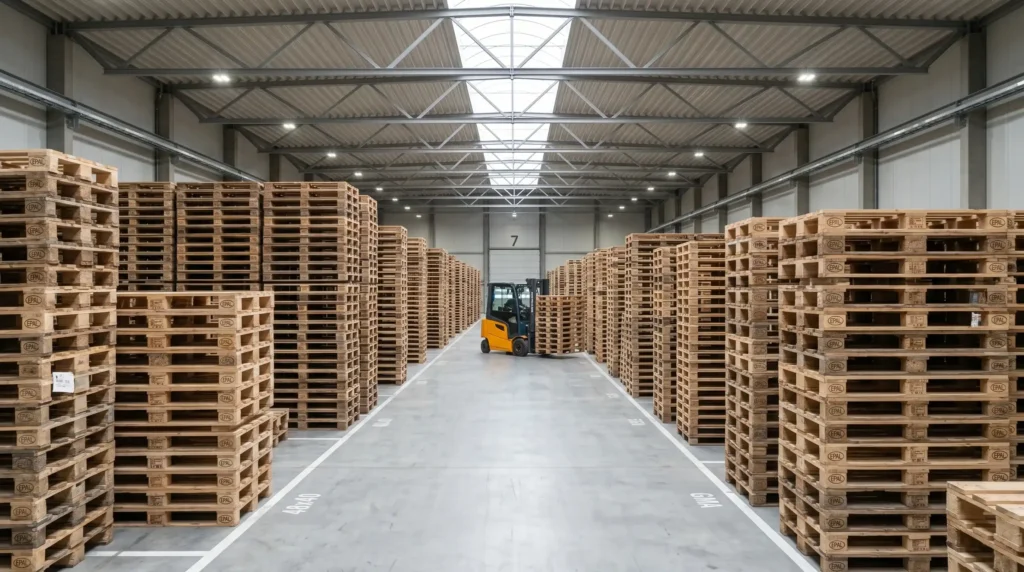
Sustainability is no longer optional in today’s supply chains—it’s an expectation. While most consumers never see the logistics behind the products they buy, pallets play a critical role in how goods are stored, transported, and delivered. With nearly two billion pallets in use every day across the United States, the environmental impact of pallet choice matters. At Advance Pallet and Lumber Ltd., sustainability and a lower carbon foot print are just a few ways we can add value for our customers.
One of the most common questions we hear is: Are wood pallets or plastic pallets better for the environment?
Independent research consistently shows that wood pallets are the more sustainable option—and here’s why.
Why Wood Pallets Are Better for the Environment
1. Wood Pallets Are Made from Renewable Resources
Wood pallets are produced using responsibly sourced timber, often from by-products of other lumber operations. They are not harvested from old-growth forests. Thanks to sustainable forestry practices, more trees are planted than harvested each year in the United States, making wood a truly renewable resource.
Trees naturally absorb carbon dioxide, meaning well-managed forests help reduce overall carbon emissions. In contrast, plastic pallets are made from petroleum-based materials. The extraction and processing of fossil fuels contribute to air and water pollution and increase greenhouse gas emissions.
Choosing wood pallets supports renewable forestry—not oil-based manufacturing.
2. Wood Pallets Support a Reduce, Reuse, Recycle Supply Chain
One of the biggest sustainability advantages of wood pallets is their reuse potential. Wood pallets can be repaired, rebuilt, and reused many times throughout their lifespan (we repair pallets in our plants in Surrey, BC, Kelowna, BC, and Calgary, AB). When they can no longer be used for shipping, the material is repurposed into products such as mulch, animal bedding, biofuel, furniture, and landscaping materials (all our locations take used pallets that are end of life, and remove all the re-usable boards, and chip all the remaining components for biofuel, animal bedding, landscaping materials amonth other bi-products).
This extended lifecycle dramatically reduces waste. In fact, approximately 95% of wood pallets in the U.S. are recycled or reused, making them one of the most recycled industrial products in the country.
Plastic pallets, while durable, are far more difficult and costly to recycle and often end up in landfills once damaged.
3. Wood Pallets Are Biodegradable
At the true end of their lifecycle, wood pallets do what sustainable materials should do—they biodegrade. Properly treated and disposed pallet wood naturally breaks down, returns nutrients to the soil, and supports new plant growth.
Plastic pallets do not biodegrade. Even after years of use, they remain a long-term environmental burden if discarded.
Wood pallets leave nothing behind but fertile ground for future growth.
The Smart Choice for Sustainable Supply Chains
Wood pallets combine performance, cost-effectiveness, and environmental responsibility. They are renewable, repairable, recyclable, and biodegradable—making them an essential component of a sustainable supply chain.
As more businesses prioritize environmental responsibility, choosing wood pallets is a practical way to reduce environmental impact while maintaining reliability and efficiency. Companies that use wood pallets aren’t just moving products—they’re supporting a more sustainable future.