
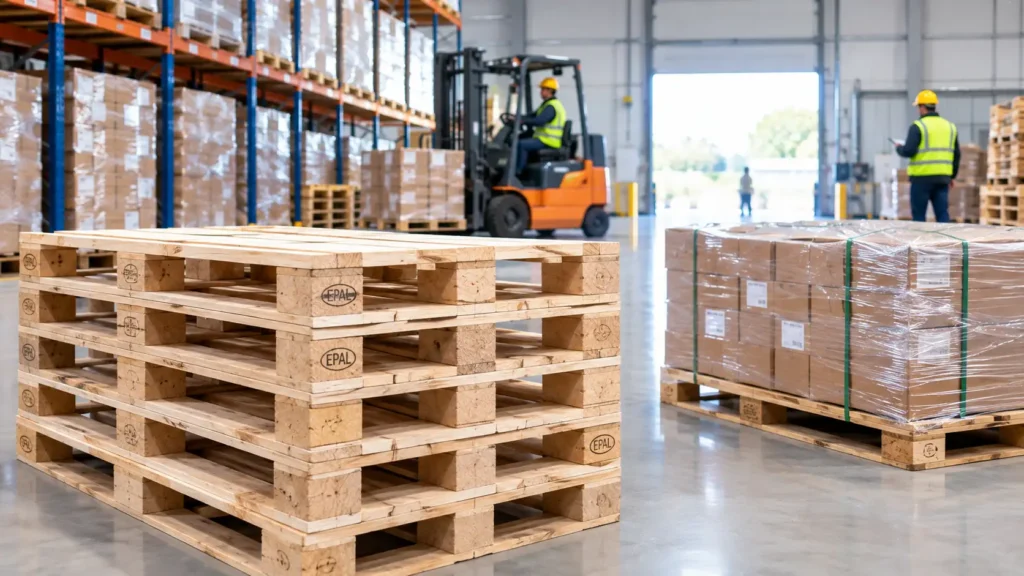
If you walk into a warehouse, factory, or distribution center, you will see products stacked on flat wooden platforms. These platforms are called pallets.
But what are pallets exactly? And why are they so important in supply chains?
Even though pallets look simple, they play a huge role in how goods move from one place to another. Without pallets, modern shipping and storage would be slow, messy, and expensive.
In this guide, you will learn:
- What pallets are
- Why businesses use pallets
- Types of pallets
- Standard pallet sizes
- How pallets support supply chains
- How to choose the right pallet
Let’s start with the basics.
What Are Pallets?
Pallets are flat, strong platforms used to hold and transport goods.
Products are stacked on top of a pallet. A forklift or pallet jack then lifts the entire pallet and moves it at once. This makes handling goods fast and safe.
Instead of moving boxes one by one, workers can move hundreds of products together.
In simple words:
A pallet is a base that allows goods to be moved, stored, and transported easily.
Most pallets are made of wood. But they can also be made from:
- Plastic
- Metal
- Corrugated paper
Why Are Pallets Important?
Pallets are important because they:
- Save time during loading and unloading
- Reduce manual labor
- Protect products from ground moisture
- Make stacking and storage easier
- Reduce product damage
- Improve warehouse organization
Without pallets, supply chains would slow down significantly.
Types of Pallets
Different industries use different types of pallets depending on weight, budget, and hygiene requirements.
1. Wood Pallets
Wood pallets are the most commonly used pallets in the world.
They are:
- Strong
- Affordable
- Easy to repair
- Widely available
Most shipping and warehousing companies prefer wood pallets because they offer a good balance between cost and durability.
2. Plastic Pallets
Plastic pallets are durable and clean.
They are often used in:
- Food industries
- Pharmaceutical companies
- Cold storage facilities
They cost more than wood pallets but last longer and resist moisture.
3. Metal Pallets
Metal pallets are made from steel or aluminum.
They are used for:
- Heavy machinery
- Automotive parts
- Industrial equipment
They are extremely strong but more expensive.
4. Corrugated (Paper) Pallets
These pallets are lightweight and often used for air freight or export shipments.
They are ideal for:
- Lightweight goods
- One-time shipments
Comparison Table: Different Types of Pallets
Here is a simple table to understand the differences:
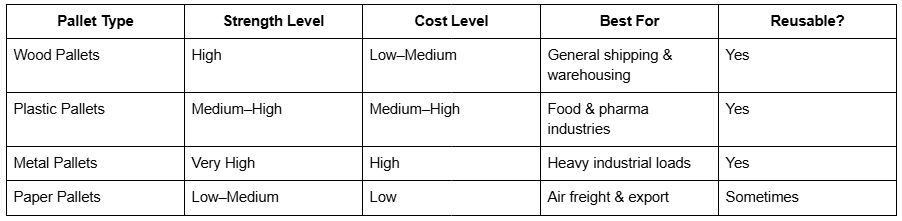
This comparison helps businesses decide which pallet type fits their needs.
Standard Pallet Sizes
In North America, the most common pallet size is:
48 x 40 inches
This size is widely used because it fits efficiently inside trucks and containers.
Other sizes are also available depending on industry needs. Using standard pallet sizes improves storage planning and reduces transportation costs.
How Pallets Are Used in Supply Chains
A supply chain is the journey a product takes from manufacturer to customer.
Pallets help at every stage of this journey.
1. In Manufacturing
Finished products are stacked on pallets after production. This keeps them ready for storage or shipping.
2. In Warehousing
Pallets allow goods to be stacked vertically. This saves space and keeps the warehouse organized.
3. During Transportation
Trucks, containers, and ships carry goods on pallets. This speeds up loading and unloading.
4. In Distribution Centers
Pallets make cross-docking easier. Goods can move quickly from one truck to another without long storage.
Because of pallets, businesses can move thousands of products safely in a short time.
New vs. Used vs. Recycled Pallets
Businesses can choose from different pallet conditions.
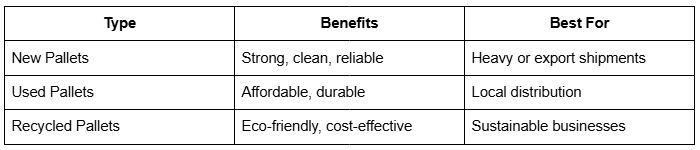
Recycled pallets are becoming popular because they reduce waste and support environmentally responsible operations.
Heat-Treated Pallets for International Shipping
When pallets are used for international shipping, they often require heat treatment.
Heat treatment removes insects and pests from the wood. This prevents harmful bugs from spreading between countries.
Heat-treated pallets follow international shipping rules and usually carry a certification stamp.
How to Choose the Right Pallet
Choosing the right pallet depends on:
- Product weight
- Shipping destination
- Industry requirements
- Budget
- Hygiene standards
A good pallet protects your goods and reduces long-term costs.
Frequently Asked Questions (FAQ)
What are pallets used for?
Pallets are used to store, move, and transport goods safely in warehouses and supply chains.
What are pallets usually made of?
Most pallets are made of wood, but they can also be made from plastic, metal, or paper materials.
What is the standard pallet size?
The most common pallet size in North America is 48 x 40 inches.
Why are pallets important in logistics?
Pallets improve efficiency, reduce labor costs, protect products, and speed up shipping processes.
Can pallets be reused?
Yes. Many pallets, especially wood and plastic ones, can be reused or recycled multiple times.
So, what are pallets?
Pallets are strong, flat platforms that make moving goods easier, faster, and safer. Even though they look simple, they are a key part of modern supply chains.
From warehouses to trucks to retail stores, pallets help products travel smoothly from start to finish.
If your business depends on efficient storage and transportation, choosing the right pallet solution can improve productivity and reduce costs.