
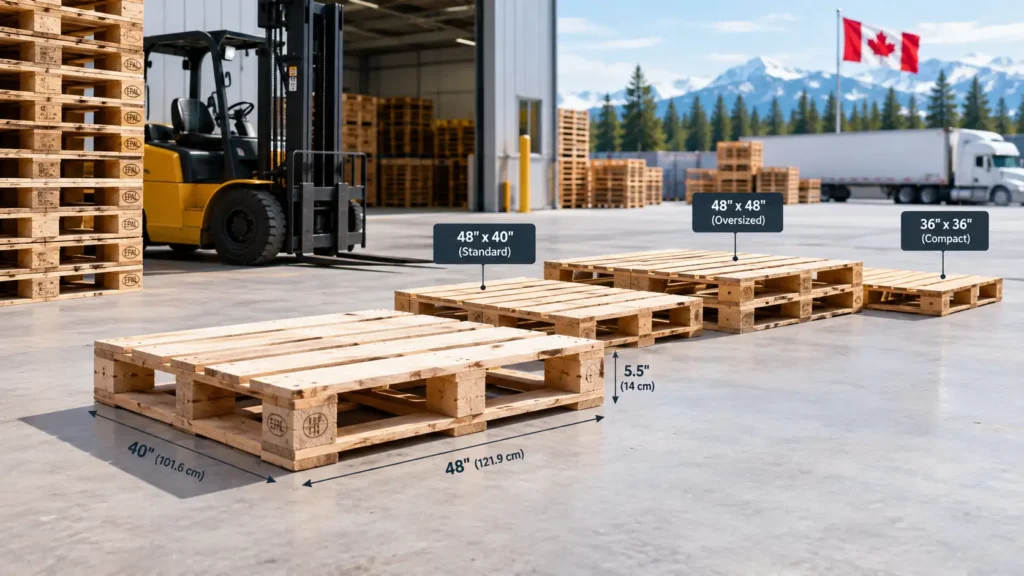
Pallets may look simple, but their size plays a very important role in shipping and storage. Using the right pallet size helps businesses save space, reduce costs, and move goods safely.
This is why understanding pallet sizes in Canada is important for warehouses, manufacturers, and logistics companies.
Across Canada, businesses use standard pallet sizes to make transportation smoother and more efficient. In this guide, we’ll explain the most common pallet sizes in Canada, why they matter, and how to choose the right one for your business.
What Are Pallet Sizes?
Pallet size refers to the length and width of a pallet. These measurements decide how much space the pallet takes in a warehouse, truck, or shipping container.
Using standard pallet sizes helps businesses stack goods properly, use forklifts easily, and avoid wasted space. When pallets are too large or too small, they can cause handling problems and increase shipping costs.
Why Pallet Sizes Matter in Canada
Canada has long shipping distances and diverse industries. From local deliveries to cross-country transportation, pallet size affects how efficiently goods move.
Using the correct pallet size helps businesses:
- Improve truck and container space usage
- Reduce product movement and damage
Standard pallet sizes also help warehouses design better storage layouts and speed up loading and unloading.
Standard Pallet Sizes in Canada
Most pallet sizes used in Canada follow North American standards. The most common size is widely accepted across industries.
Here is a simple table explaining standard pallet sizes in Canada:
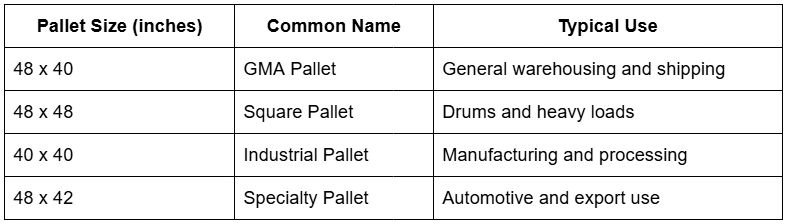
The 48 x 40 pallet is the most widely used size because it fits efficiently in trucks and warehouses.
Industries and Pallet Size Requirements
Different industries use different pallet sizes based on product type and handling needs.
Manufacturing and distribution centers often prefer the 48 x 40 pallet because it works well with forklifts and racking systems. Automotive and industrial sectors may use larger or square pallets for heavy or uneven loads.
Food and retail industries also rely on standard pallet sizes to keep supply chains consistent and efficient.
Are Custom Pallet Sizes Used in Canada?
While standard sizes cover most needs, some businesses require custom pallet sizes.
Custom pallet sizes are often used when:
- Products are oversized or oddly shaped
- Storage systems require exact dimensions
In such cases, custom pallets help reduce damage and improve load stability.
Choosing the Right Pallet Size for Your Business
Selecting the right pallet size depends on several factors, including product dimensions, weight, storage system, and shipping method.
Using the wrong size can lead to wasted space, unstable loads, and higher transportation costs. The right size improves efficiency and keeps operations running smoothly.
Working with an experienced pallet supplier can help businesses choose pallet sizes that fit both their products and their logistics setup.
Pallet Sizes and Transportation Efficiency
Truck and container space is expensive. Standard pallet sizes in Canada are designed to maximize space usage during transport.
When pallets fit properly, more products can be shipped per load. This reduces the number of trips needed and lowers fuel and labor costs.
Over time, choosing the correct pallet size can have a big impact on overall supply chain expenses.
Final Thoughts on Pallet Sizes in Canada
Understanding pallet sizes in Canada is essential for efficient storage and transportation. Standard pallet sizes help businesses save space, reduce costs, and move goods safely across warehouses and trucks.
While custom sizes are sometimes needed, standard pallet sizes remain the backbone of Canadian supply chains.
Choosing the right pallet size may seem like a small decision, but it can make a big difference in how smoothly your operations run.
Frequently Asked Questions – FAQs
1. What is the standard pallet size in Canada?
The most common pallet size in Canada is 48 x 40 inches, also known as the GMA pallet. It is widely used across industries because it fits efficiently in trucks and warehouse systems.
2. Why is the 48 x 40 pallet size so popular in Canada?
This pallet size is popular because it offers the best balance between storage efficiency and transportation optimization. It fits well in shipping containers and is compatible with most forklifts and racking systems.
3. Are pallet sizes standardized across all industries in Canada?
No, while 48 x 40 inches is the most common, different industries may use other sizes depending on product type, weight, and handling requirements.
4. What are the common pallet sizes used in Canada besides 48 x 40?
Other commonly used pallet sizes include 42 x 42 inches, 48 x 48 inches, and 36 x 36 inches, depending on specific industry needs.
5. When should a business use custom pallet sizes?
Custom pallet sizes are used when products are oversized, irregularly shaped, or when specific storage systems require unique dimensions.
6. How do pallet sizes impact shipping costs?
Using the correct pallet size helps maximize space in trucks and containers, reducing the number of shipments required and lowering transportation costs.
7. How do pallet sizes affect warehouse efficiency?
Standard pallet sizes make it easier to design storage layouts, improve stacking, and ensure smooth handling with forklifts, leading to faster operations.
8. What happens if the wrong pallet size is used?
Using the wrong pallet size can lead to wasted space, unstable loads, increased product damage, and higher shipping costs.
9. Do Canadian pallet sizes differ from US pallet sizes?
Most Canadian pallet sizes follow North American standards, so they are generally the same as those used in the United States.
10. How do I choose the right pallet size for my business?
The right pallet size depends on product dimensions, weight, storage systems, and transportation methods. Consulting a pallet supplier can help you make the best choice.
11. Are wooden pallets the standard choice in Canada?
Yes, wooden pallets are the most commonly used due to their durability, cost-effectiveness, and ease of repair, though plastic and metal pallets are also used in specific industries.
12. Can pallet size affect product safety during transport?
Yes, the correct pallet size ensures better load stability, reducing movement and minimizing the risk of damage during transportation.